

Learn about hyperpigmentation, its causes, symptoms, types, and effective treatments at Gindodia Hospital. Get expert dermatology care for clearer, even-toned, and healthier skin.
Whether you're dealing with acne marks, melasma, age spots, or post-inflammatory pigmentation, understanding the causes and available treatments is the first step toward healthier, more even-toned skin.
What is Hyperpigmentation?
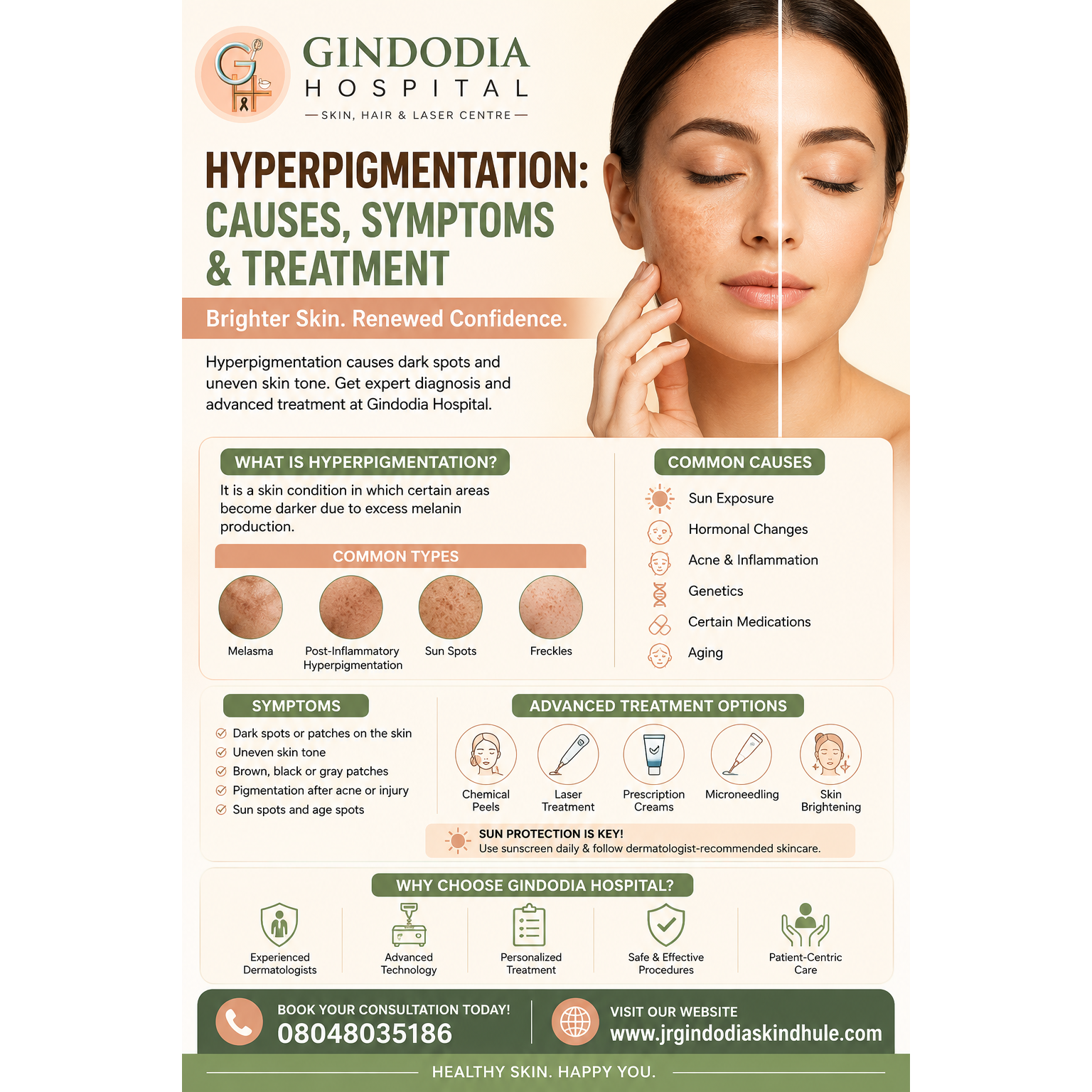
Hyperpigmentation is a skin condition in which certain areas of the skin become darker due to increased production of melanin—the pigment responsible for skin color. It can occur on the face, neck, hands, arms, or any other part of the body and may affect both men and women.
Hyperpigmentation can appear as:
Brown or black spots
Uneven skin tone
Dark patches on the face
Acne scars
Sun spots
Pigmentation after skin injuries
Types of Hyperpigmentation
MelasmaMelasma causes symmetrical brown or grayish patches, usually on the cheeks, forehead, nose, and upper lip. It is commonly associated with hormonal changes, pregnancy, or oral contraceptive use.
Post-Inflammatory Hyperpigmentation (PIH)
PIH develops after skin inflammation caused by acne, eczema, burns, injuries, or allergic reactions. Once the skin heals, dark spots may remain.
Sunspots (Solar Lentigines)
Also known as age spots or liver spots, these develop after prolonged exposure to ultraviolet (UV) rays and commonly appear on the face, hands, shoulders, and arms.
FrecklesFreckles are small brown spots that become more noticeable after sun exposure and are often influenced by genetics.
Common Causes of Hyperpigmentation
Several factors can contribute to excessive melanin production, including:
Excessive Sun Exposure
Ultraviolet rays stimulate melanin production, leading to dark spots and uneven pigmentation.
Hormonal Changes
Pregnancy, hormonal medications, and hormonal imbalances can trigger melasma.
Acne and Skin Injuries
Inflammation from acne, burns, cuts, insect bites, or cosmetic procedures can leave behind pigmentation.
AgingAs people age, repeated sun exposure often leads to age spots and uneven skin tone.
Certain Medications
Some medications may increase skin sensitivity to sunlight, resulting in pigmentation changes.
Medical Conditions
Certain endocrine disorders and skin diseases can contribute to hyperpigmentation.
Hyperpigmentation Treatment at Gindodia Hospital
At Gindodia Hospital, our dermatologists evaluate the underlying cause before recommending a customized treatment plan. Treatment options may include:
Chemical Peels
Medical-grade chemical peels help remove damaged skin cells, reduce pigmentation, and improve skin texture.
Laser Pigmentation Treatment
Advanced laser technology targets excess melanin while minimizing damage to surrounding skin.
Prescription Creams
Dermatologist-prescribed topical medications may help reduce pigmentation and promote a more even complexion.
Microneedling
Microneedling stimulates collagen production and helps improve post-inflammatory pigmentation and acne scars.
Skin Brightening Treatments
Professional dermatological procedures can enhance skin tone and reduce discoloration safely.
Sun Protection Guidance
Using broad-spectrum sunscreen daily is essential to prevent pigmentation from worsening and to maintain treatment results.
Hyperpigmentation is a common yet treatable skin condition. Whether caused by sun exposure, hormonal changes, acne, or aging, professional dermatological care can significantly improve your skin's appearance. At Gindodia Hospital, we provide personalized treatment plans using advanced technologies to help you achieve healthier, clearer, and more radiant skin.
If you're struggling with stubborn pigmentation or uneven skin tone, schedule a consultation with our dermatology experts and take the first step toward confident, healthy skin.